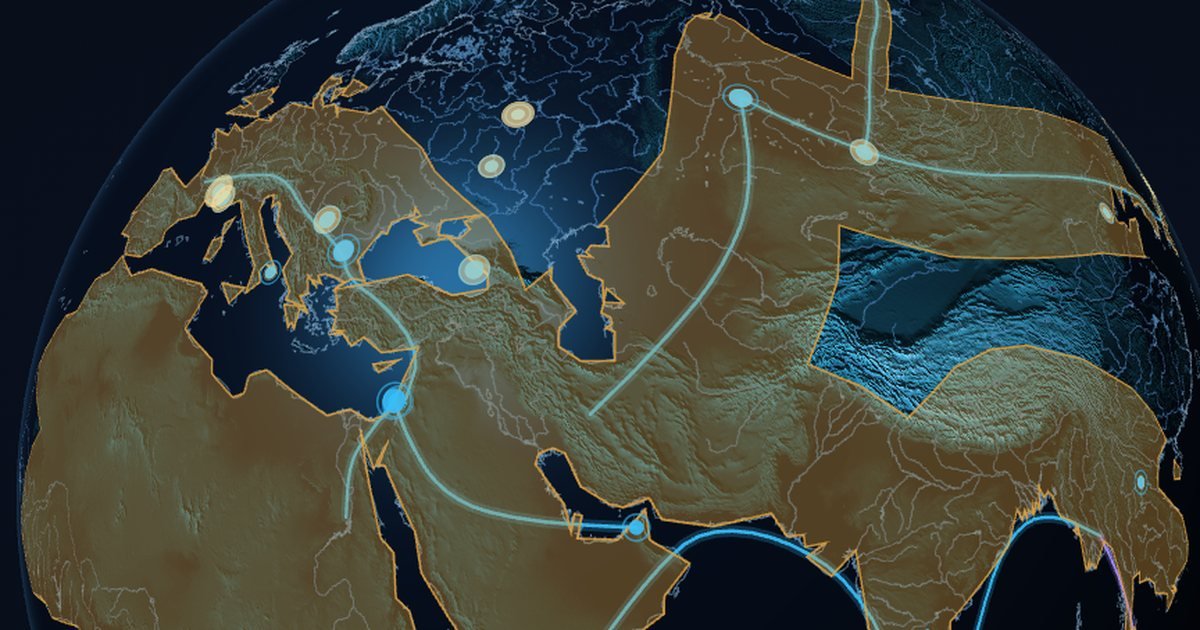
 Play it on the globe →
For most of our existence we were an African animal. Then a few hundred people crossed the Bab-el-Mandeb and never went back — and everyone alive outside Africa descends from them. The routes run first and the ground fills in behind them: down the Indian Ocean shore, across open water to Australia, into an ice-age Europe, over the Bering land bridge and the length of the Americas, and finally out into the Pacific, where the last big island on Earth was reached only seven centuries ago.
61events
31routes
300,000 BC – 1400span
Earth & Naturecategory
Inhabited worldAfricaInto EurasiaSahulThe AmericasThe Pacific
What is on the map
- 8 Africa
- 25 Into Eurasia
- 7 Sahul
- 9 The Americas
- 12 The Pacific
Chronology
- Jebel Irhoud: the oldest Homo sapiens fossils knownfossil▸
- The Florisbad skull, South Africafossil▸
- Omo Kibish, Ethiopia — long the oldest of our speciesfossil▸
- Misliya Cave: a jawbone on Mount Carmel, 185,000 years oldfossil▸
- Pinnacle Point: shellfish, pigment and heat-treated stonesite▸
- Herto, Ethiopia: Homo sapiens idaltufossil▸
- Klasies River Caves, at the southern tip of the continentsite▸
- Jebel Faya: African toolkits on the far side of Arabiasite▸
- Skhul and Qafzeh: an excursion that left no descendantsfossil▸
- Blombos Cave: cross-hatched ochre, the oldest known drawingart▸
- Border Cave, and the oldest known digging sticksite▸
- Jwalapuram, India: tools above and below the Toba ashsite▸
- Toba erupts: the largest eruption in two million yearseruption▸
- The dispersal that stuck: perhaps a thousand people crossed the straitdispersal▸
- Madjedbebe, Arnhem Land — contested, and possibly Australia’s oldestsite▸
- Sahul reached across open sea — no land bridge ever joined itcrossing▸
- Warratyi: the arid interior, far from any coastsite▸
- Fa Hien Cave, Sri Lanka: rainforest foragers and bone arrowheadssite▸
- Devil's Lair, at the south-western corner of the continentsite▸
- Tam Pa Ling, Laos: modern humans deep in the mainlandfossil▸
- Bacho Kiro, Bulgaria: the earliest modern humans in Europesite▸
- Maros-Pangkep, Sulawesi: a painted warty pig, the oldest figurative artart▸
- Ust'-Ishim man: a whole genome from western Siberiafossil▸
- Grotta del Cavallo, in the heel of Italyfossil▸
- Lake Mungo: cremation and ochre burial in the Australian interiorburial▸
- The Deep Skull of Niah Cave, Borneofossil▸
- Peștera cu Oase: a man with a Neanderthal great-great-grandparentfossil▸
- Denisova Cave: a third human lineage, and its genes in Oceaniaadmixture▸
- Neanderthal ancestry: 1–2% in everyone outside Africaadmixture▸
- Tianyuan man, near Beijingfossil▸
- The Neanderthals disappearextinction▸
- Kostenki, on the Don: mammoth-bone dwellingssite▸
- Chauvet: lions, rhinos and horses drawn by torchlightart▸
- The Japanese archipelago is settledsite▸
- Sungir: two children buried with ten thousand ivory beadsburial▸
- Yana Rhinoceros Horn Site: humans inside the Arctic Circlesite▸
- The Last Glacial Maximum: sea level 120 m lower, ice to the Thamesclimate▸
- The Beringian standstill: a population isolated for millenniastandstill▸
- Mal'ta-Buret', by Lake Baikal: the Ancient North Eurasianssite▸
- White Sands: footprints that predate the ice-free corridorfootprints▸
- Cooper's Ferry, Idaho, on the Salmon Riversite▸
- Buttermilk Creek, Texas: tools older than Clovissite▸
- Monte Verde, Chile — the far end of two continentssite▸
- Paisley Caves, Oregonsite▸
- Jōmon pottery in Japan, among the oldest anywhereculture▸
- Clovis points spread across North America in a few centuriesculture▸
- Cueva Fell, Patagonia: the end of the roadsite▸
- The Austronesian expansion sets out from Taiwandispersal▸
- The Batanes, the first islands south of Taiwanlandfall▸
- Lapita pottery appears in the Bismarck Archipelagoculture▸
- The Marianas: the longest open-sea crossing anyone had yet madelandfall▸
- Vanuatu, New Caledonia and Fiji within a few generationslandfall▸
- Samoa and Tonga: the eastern edge, and then a long pauselandfall▸
- Madagascar is settled from Borneo, 7,000 km awaylandfall▸
- Iceland: the Norse settlement beginslandfall▸
- The Marquesas, the launching point for the last voyageslandfall▸
- The Society Islands: Tahiti and its navigatorslandfall▸
- The Thule reach Greenland, the last stretch of the Arcticlandfall▸
- Hawaii, at the northern point of the Polynesian trianglelandfall▸
- Rapa Nui, the loneliest inhabited island on Earthlandfall▸
- Aotearoa: the last large landmass on Earth to be settledlandfall▸
Routes and campaigns
- Up the Nile and across Sinai
- Into an Arabia that was briefly green
- Across the Bab-el-Mandeb — the crossing that stuck
- Along the shore of the Indian Ocean
- Round the Bay of Bengal
- Down the Sunda shelf, dry land in that sea level
- Island-hopping across Wallacea
- Into Sahul: New Guinea and Australia are one continent
- North-west by the Danube into Europe
- North-east across the steppe
- East to the Pacific coast of Asia
- Over the land bridge to the islands of Japan
- North into the Arctic, in the teeth of the ice
- Across the Bering land bridge, and a long wait
- Down the Pacific coast, by boat and by beach
- Inland, once the ice-free corridor opened
- The whole length of South America
- Out of Taiwan: the Austronesian expansion begins
- Down the Philippines to Borneo and Sulawesi
- West through Java and Sumatra
- Lapita pottery reaches the Bismarcks
- North-east to the Marianas, 2,000 km of open sea
- Into Remote Oceania: Vanuatu, New Caledonia, Fiji
- Samoa and Tonga, then two thousand years of pause
- West across the Indian Ocean to Madagascar
- Norse westing: Norway, Iceland, Greenland
- East at last: the Marquesas and the Society Islands
- North to Hawaii, 4,000 km across the equator
- East to Rapa Nui, against the trade winds
- The Thule sweep across the Canadian Arctic
- South-west to Aotearoa, into a colder sea
Background reading: the parent article.
Other stories
Genghis KhanFrom the Onon to the Caspian, 1206–1227Marco Polo's TravelsVenice to Xanadu and back, 1271–1295Nuclear detonationsEvery recorded nuclear test, 1945–1998The American Civil WarOne country, torn in two and taken back battle by battle, 1860–1865The Gallic WarsCaesar's conquest of Gaul, 58–50 BCVolcanic EruptionsEvery significant eruption on record since 1500